Dog Bite Liability in Mississippi: What the Law Requires
Mississippi has no dog-bite statute. Instead, courts apply the "one-bite rule" — meaning an injured person must prove the owner knew the dog was dangerous before the attack. Here is what that means for your claim.
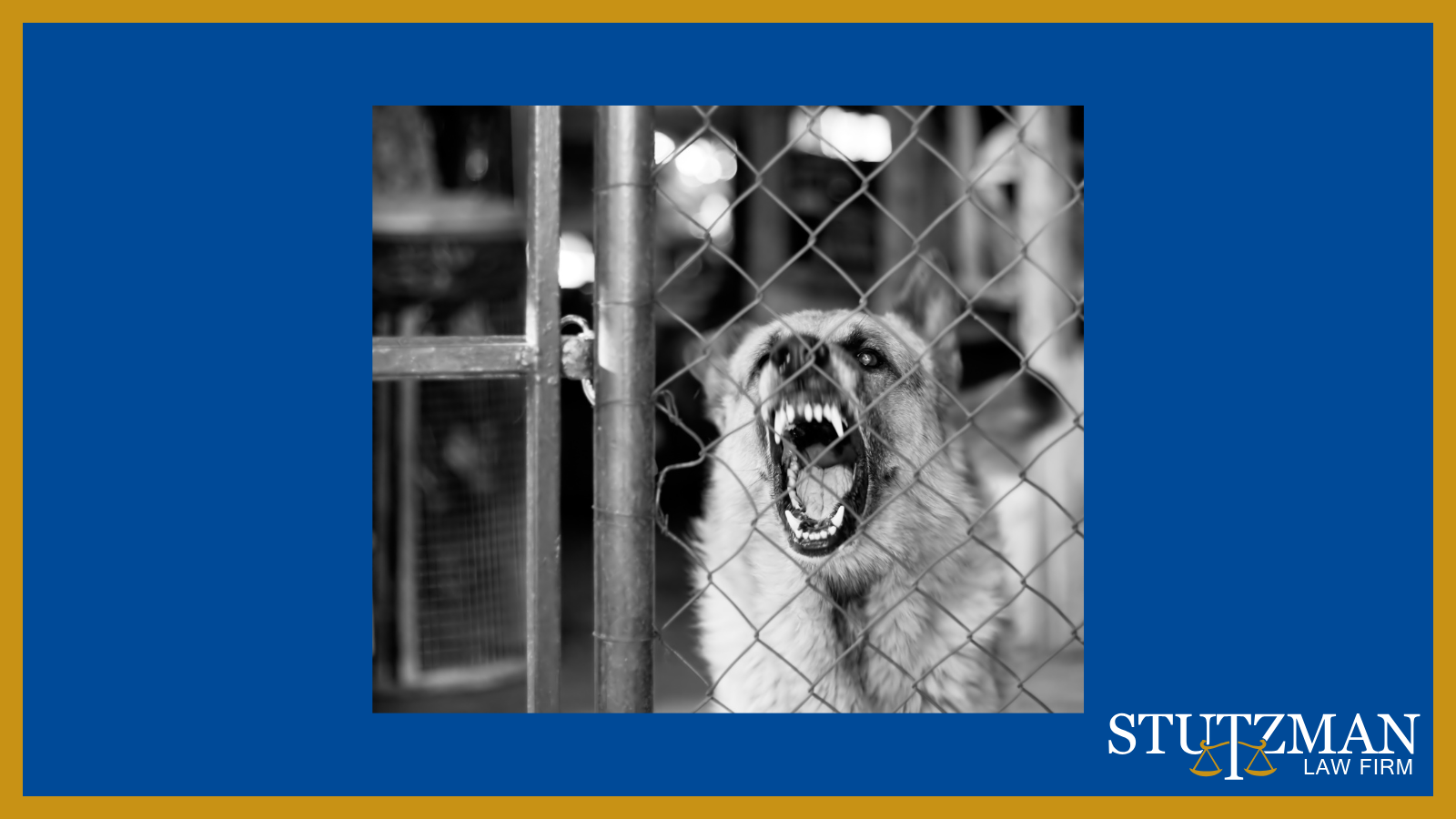
Picture a summer evening in a Clinton neighborhood. Kids are riding bikes, a neighbor's dog is out in the yard, and for reasons nobody can quite explain, it gets loose and bites a child walking past on the sidewalk.
The parents assume what most people would assume: the dog's owner is responsible.
In Mississippi, that assumption is often wrong. To understand why, you have to understand a strange little rule in Mississippi dog-bite law.
Does Mississippi Hold Dog Owners Automatically Liable for a Bite?
No. Unlike many states that have passed strict liability dog-bite statutes — which put an owner on the hook for any bite regardless of the dog's history — Mississippi has no dog-bite-specific statute at all. Instead, Mississippi courts apply a common-law doctrine known as the "one-bite rule." The name is a little misleading. It doesn't mean an owner is legally entitled to one free bite in every case. It means an injured person has to prove the owner had reason to know the dog was dangerous before the bite happened.
What Is Mississippi's "One-Bite Rule"?
The rule traces back to a 1973 Mississippi Supreme Court decision, Poy v. Grayson, 273 So. 2d 491 (Miss. 1973). Under that case, a dog bite victim generally has to show two things: (1) that the dog showed a dangerous propensity or disposition before the attack, and (2) that the owner knew or reasonably should have known about it and reasonably should have foreseen that the dog was likely to attack someone. Lawyers call the knowledge piece "scienter," which is just a formal word for knowledge. Without it, a claim against the owner usually doesn't get off the ground, even when the injury is serious.
What Counts as Proof the Owner Knew?
This is where dog bite cases in Mississippi are usually won or lost. A prior bite is the clearest evidence, but it isn't the only kind. Growling or snapping at visitors, lunging at the fence when people walk by, fighting with other dogs, or being kept chained or muzzled because of past behavior can all show the owner was on notice. Use as a guard dog can be part of the picture too. Breed by itself is not enough in Mississippi, which I'll come back to below.
In the cases I've handled, a "Beware of Dog" sign has cut both ways. An owner puts it up to warn people away and, they hope, to reduce their own exposure. But that same sign can become the injured person's best evidence that the owner already knew exactly what the dog was capable of. If you needed to warn people to stay away, you knew something about that dog that a stranger walking by didn't.
Does a Leash Law Violation Change Things?
Maybe, but it's not clear. Mississippi has no statewide leash law. Many cities and some counties have their own ordinances requiring dogs to be leashed, fenced, or otherwise kept from running at large. It seems like breaking one of those ordinances ought to make the owner responsible when the loose dog bites someone, and there is a legal theory that gets you there. Mississippi courts recognize that violating a safety ordinance can be negligence in itself when the ordinance was written to protect people like you from the kind of harm you suffered.
Here is the problem. No Mississippi appellate court has applied that theory to a dog bite. The one time the argument reached the Court of Appeals, in Hawkins v. Hale, 185 So. 3d 1076 (Miss. Ct. App. 2016), the owner won. The dog in that case had been chained and broke free, so the court found the leash law was never violated and went right back to the one-bite rule. A leash law violation is a fact worth knowing and an argument worth making. It's just not yet a proven way around the one-bite rule.
What If the Dog Is a Breed the City Has Banned?
Some Mississippi cities and towns have ordinances that ban certain breeds outright or restrict how and where they can be kept. These restrictions commonly cover bull breeds (such as pit bulls or Staffordshire Bull Terriers) and wolf-dog hybrids. The argument here is simple. A city bans a breed because it decided that kind of dog is a danger to people. An owner who keeps that dog anyway, in violation of the ordinance, should not be heard to say he had no reason to think it could hurt someone.
I have made that argument for a client in a case that settled before any court ruled on it, and I think it is a good one. But I want to be as clear with you as I was about leash laws: no Mississippi appellate court has held that violating a breed ordinance takes the place of the one-bite rule. And, in 2025, the Mississippi Supreme Court rejected the idea that a dog is dangerous just because it is a pit bull. That case, TLM Investments, LLC v. Yates, 409 So. 3d 582 (Miss. 2025), did not involve a breed ordinance, so the question is still open. But it tells you our courts want proof about the particular dog, not the breed.
A breed ordinance violation is worth finding and worth arguing. It works best alongside evidence of what that particular dog had done before, not in place of it. That is why where the bite happened can matter as well as how it happened. Finding out whether the city or county has a breed ordinance, and whether the dog was covered by it, is part of the analysis.
What Should You Do If You're Bitten by a Dog in Mississippi?
- Get medical attention first, even if the wound looks minor. Dog bites carry a real risk of infection, and a doctor's records also become important evidence of what happened.
- Get the dog owner's name, address, and contact information, along with the names of any witnesses.
- If animal control or police respond, get the report number.
- Photograph the bite, your clothing, and the location where it happened.
- Start finding out what you can about the dog's history — the dog's breed, whether it has bitten or threatened anyone before, whether it was running loose, and whether the property is in a city or county with a leash ordinance or breed ban ordinance.
- Find out whether the owner has homeowners or renters insurance. Many policies cover dog-bite claims, and that coverage is often the source of any recovery. Be aware that some policies exclude certain breeds, and some exclude dog bites altogether.
Most dog owners are not going to readily volunteer this information. This is where legal representation can assist you with your claim.
What About Rabies Quarantine and Animal Control Rules?
Separately from the civil liability question, Mississippi State Department of Health rules require a healthy dog that bites a person to be confined and observed for 10 days. That process exists to protect public health, and it can also create useful records: quarantine paperwork, health department records, and animal control reports are often where the earliest documentation of a dog's bite history appears.
The Takeaway
Mississippi's one-bite rule means a dog bite claim is rarely as simple as "the dog bit me, so the owner owes me." It comes down to what the owner knew and when they knew it. Whether a local ordinance was being broken at the time can help. Those details matter, so if you or someone in your family has been bitten, obtaining that information early can impact whether or not a dog bite claim can be pursued.
If you're taking the time to read this, you're either in this situation or you have real questions, and I'm happy to talk with you about it, no charge. Our number is (769) 208-5683. Feel free to reach out.
This post is provided for general educational purposes only and does not constitute legal advice. Every case depends on its own specific facts. If you have questions about a dog bite or other injury, consult a licensed Mississippi attorney about your particular situation.
Explore Topics
Written by
Ronald E. Stutzman, Jr.
Content creator and writer sharing insights and stories.